Quick Summary
Most St. Augustine grass problems in New Orleans come down to three causes: chinch bug infestation, brown patch fungal disease, or incorrect watering. Chinch bugs create expanding circular dead patches in summer heat that look like drought stress but don’t respond to irrigation. Brown patch is a fungal disease that appears as irregular brown rings in fall and winter and is worsened by evening watering or overwatering. Drought stress and overwatering create similar visual symptoms but require opposite treatments, making correct diagnosis before any intervention critical. Big Easy Sod serves homeowners across Greater New Orleans and provides lawn health assessments to identify the actual cause of St. Augustine failure before recommending treatment or replacement.
Last Updated: May 2026
St. Augustine grass dominates residential lawns across New Orleans and the Louisiana Gulf Coast because it tolerates shade better than Bermuda, handles subtropical heat well, and establishes quickly after installation. It also produces more service calls than any other grass type in Greater New Orleans. Most St. Augustine problems Big Easy Sod diagnoses in the field come down to three causes: chinch bugs, brown patch fungal disease, or a watering schedule that does not match Louisiana’s seasonal conditions. Correct diagnosis before any treatment is the most important step, because the wrong intervention makes most of these problems worse rather than better. Homeowners also managing summer irrigation for St. Augustine can connect watering practices to diagnosis through the summer watering guide for New Orleans sod.
How Do You Identify and Treat Chinch Bugs on St. Augustine Grass in Louisiana?
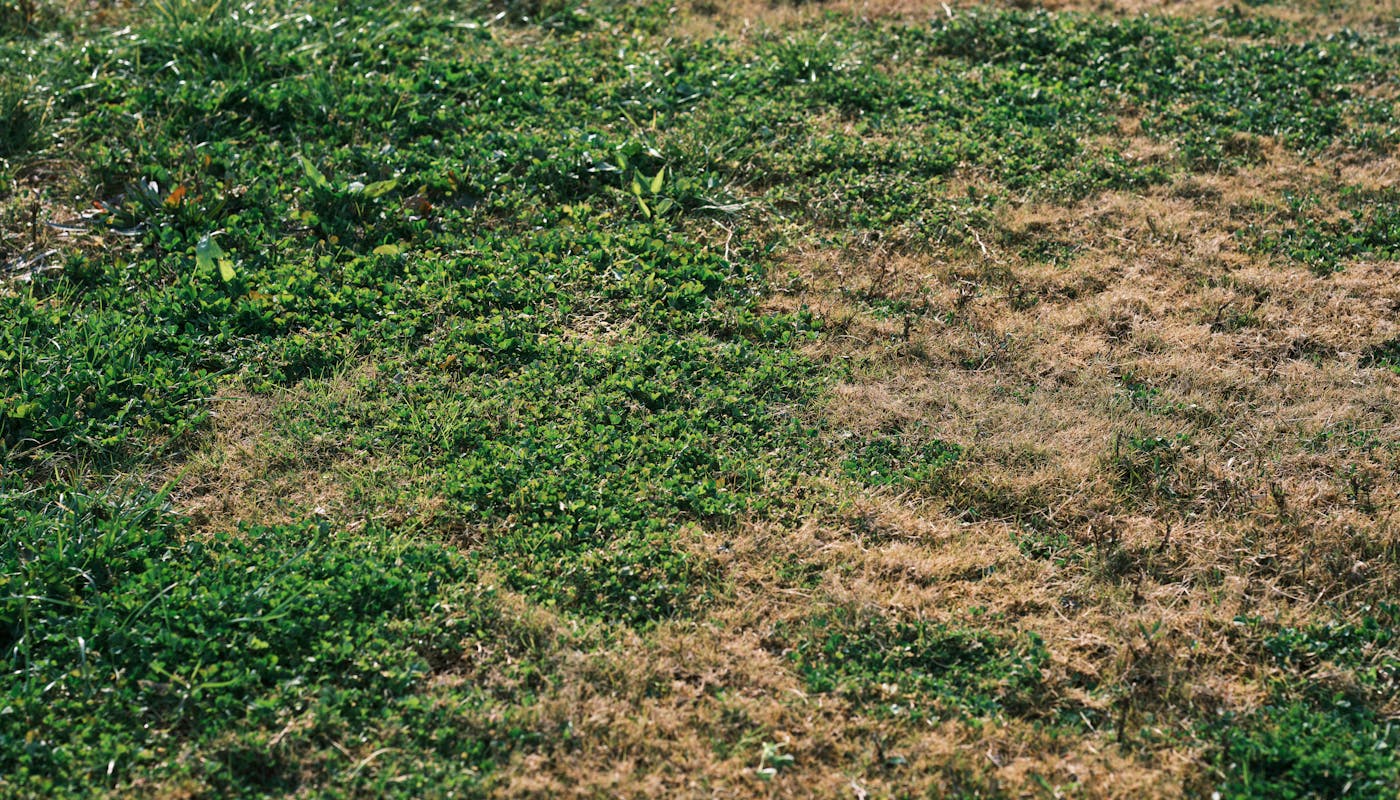
Chinch bugs are the primary insect pest on St. Augustine in Greater New Orleans. They are small, roughly 1/6 of an inch in adult form, and feed on grass blades while injecting a toxin that blocks the plant’s ability to absorb water. The visual result is patches of yellowing grass that turn brown and dead, beginning in a circular area and expanding outward in summer heat.
The key identification difference between chinch bug damage and drought stress: drought stress is uniform across the lawn, presenting as overall wilting and blade folding. Chinch bug damage starts in a specific area, often in the hottest part of the yard near pavement or a south-facing fence, and expands outward while the rest of the lawn remains green. To confirm, part the grass at the edge of the damaged area and inspect the soil surface and blade bases. Chinch bugs are visible to the naked eye at the transition between healthy and dead grass.
Treatment: apply bifenthrin or a labeled chinch bug insecticide to the perimeter of the affected area, extending 3 to 5 feet into the healthy grass to prevent spread. Repeat in 10 to 14 days. Lawn areas that have died from chinch bug damage will not recover on their own and require sod replacement after the pest is controlled. Big Easy Sod’s lawn health assessment service confirms chinch bug presence before treatment to avoid applying insecticide unnecessarily.
What Causes Brown Patch Disease on St. Augustine in New Orleans?
Brown patch is caused by Rhizoctonia solani, a fungal pathogen that thrives when nighttime temperatures stay between 60 and 75 degrees Fahrenheit combined with high humidity and wet turf surfaces. These conditions occur reliably in Greater New Orleans from late October through December, making brown patch the most common fall and early-winter lawn disease in Southeast Louisiana.
Brown patch appears as circular or irregular rings of brown grass ranging from 6 inches to several feet in diameter. The outer edge of the ring often has a darker, water-soaked appearance when the disease is active. Unlike chinch bug damage, which expands through the heat of the day, brown patch is most active overnight and in the early morning when humidity is highest.
| Symptom | Likely Cause | Season | Treatment |
|---|---|---|---|
| >Circular brown/tan patches | >Brown patch fungus | >Summer–Fall (humid nights) | >Fungicide; improve drainage; reduce N |
| >Yellowing blades, tiny insects | >Chinch bugs | >Summer | >Insecticide; check edges near concrete |
| >Thinning in shaded areas | >Insufficient light | >Year-round | >Trim trees; switch to shade variety |
| >Wilting despite watering | >Drought/heat stress | >Summer | >Deep water early morning; mulch edges |
| >Yellow, mushy grass | >Overwatering / root rot | >Spring–Summer | >Reduce irrigation; improve drainage |
| >Purple-tinged blades | >Cold damage | >Winter | >Wait for spring recovery; avoid fertilizing |
| >Uneven patchy growth | >Soil compaction | >Year-round | >Core aerate; topdress with compost |
Prevention is more effective than treatment. The two most controllable risk factors are irrigation timing and nitrogen fertilization in fall. Evening irrigation creates the wet overnight conditions that Rhizoctonia requires. Nitrogen applied in September or October pushes soft new growth that is more susceptible to fungal infection than hardened tissue. Stop nitrogen by Labor Day and switch irrigation to morning sessions between 5 and 9 a.m. For active brown patch outbreaks, fungicide applications with azoxystrobin or trifloxystrobin reduce spread but do not restore already-dead tissue. Preparing the lawn correctly each fall, including the full seasonal care steps in winter preparation for New Orleans lawns, reduces brown patch risk significantly going into the high-risk fall season.
Why Is St. Augustine Grass Thinning Under Trees in New Orleans?
St. Augustine has better shade tolerance than Bermuda but still requires a minimum of 4 hours of direct sun per day to maintain healthy density. New Orleans’ live oaks, magnolias, and crepe myrtles create partial to deep shade that worsens as tree canopies expand over years. A St. Augustine lawn that looked full when the trees were young often thins progressively as the canopy fills in, producing a condition that is not fixable by watering or fertilization changes.
The shade-tolerant St. Augustine varieties, particularly Palmetto, perform better in partial shade than standard Floratam, which is common on older New Orleans lawns. If the current variety is Floratam and the canopy has expanded to block more than 6 hours of sun per day, a variety replacement with Palmetto may stabilize the thinning. If the shade exceeds 8 hours, no St. Augustine variety will maintain acceptable density, and a consultation about alternative ground covers or hardscape is more practical than continued sod investment. Big Easy Sod can assess the shade pattern and existing variety at your property before recommending a path forward.
How Do You Fix St. Augustine Damage from Drought or Heat Stress in Louisiana?
St. Augustine showing uniform wilting, blade folding, and a grey-green color shift across the entire lawn is in moisture stress. The fix is straightforward: deep watering immediately, followed by a schedule correction to prevent recurrence. Water to wet the soil to 4 to 6 inches, confirm penetration with the screwdriver test, and resume twice-weekly morning irrigation at 0.5 inches per session.
St. Augustine that has gone brown from heat stress during an extended Louisiana drought can recover if the roots are still alive. The simplest test: tug on a brown blade at the base. If it pulls away from the stolon without resistance, the blade is dead. If it resists separation, the plant is still viable. Recovery typically takes 2 to 3 weeks of consistent irrigation and may require a nitrogen application at one-quarter the standard rate to stimulate new growth without pushing soft tissue into late summer heat. Big Easy Sod’s sod maintenance services include seasonal lawn health check-ins for homeowners who want professional confirmation before treating stress damage.
What Are the Signs of Overwatering on St. Augustine Grass?
Overwatered St. Augustine produces visual symptoms that are easily confused with underwatering or disease: overall yellowing, soft and spongy turf surface underfoot, and thin, pale grass blades. The distinguishing characteristic is context: if yellowing appears after a period of heavy irrigation or several consecutive days of rain without drainage adjustment, overwatering is the likely cause rather than drought or pest damage.
Overwatered St. Augustine in New Orleans clay is also prone to large patch fungal disease, a close relative of brown patch that creates similar ring patterns but occurs specifically in conditions of persistent soil moisture. If mushrooms appear in the lawn, the soil surface feels consistently spongy, or the grass yellows despite adequate rainfall, reduce irrigation sessions to once per week and assess drainage. For St. Augustine lawns with recurring overwatering problems, fall aeration of the clay layer is the most effective long-term fix. More on the timing and process is in the fall aeration guide for Louisiana lawns.
For a professional diagnosis of any St. Augustine problem in Greater New Orleans, call Big Easy Sod at (504) 608-3321. The team serves homeowners across New Orleans, Metairie, Kenner, the Westbank, the Northshore, and surrounding parishes in Southeast Louisiana.
Frequently Asked Questions
What kills St. Augustine grass in New Orleans?
The three most common causes of St. Augustine death in Greater New Orleans are chinch bug infestation, brown patch fungal disease, and overwatering on poorly draining clay soil. Chinch bugs inject a toxin that blocks water uptake and create expanding dead patches in summer. Brown patch creates circular brown rings in fall. Overwatering promotes root rot and fungal disease when drainage is poor.
What does chinch bug damage look like on St. Augustine grass?
Chinch bug damage on St. Augustine appears as circular patches of yellowing grass that turn brown and expand outward in summer heat, typically starting in the hottest area of the yard near pavement or south-facing walls. Unlike drought stress, which is uniform across the lawn, chinch bug damage starts in a specific location and spreads while the surrounding grass stays green. Confirming their presence requires parting the grass at the edge of the damage and inspecting the soil surface.
How do you treat brown patch on St. Augustine in Louisiana?
Prevention is more effective than treatment. Stop nitrogen fertilization by Labor Day, switch to morning irrigation between 5 and 9 a.m., and ensure the lawn has adequate aeration and drainage. For active outbreaks, fungicide applications with azoxystrobin or trifloxystrobin reduce spread. Already-dead tissue within the brown patch will not recover and may need sod repair after the disease is controlled.
Can St. Augustine grass recover from brown spots in summer?
Recovery depends on the cause. Drought-stressed St. Augustine can recover with consistent irrigation if the roots are still alive. Chinch bug damage does not recover on its own once the blades are dead. Brown patch damage from fungal disease may fill in from the surrounding healthy grass over several months once the fungal activity stops, but severe patches typically require sod repair.
Does Big Easy Sod offer St. Augustine lawn repair in New Orleans?
Yes. Big Easy Sod provides St. Augustine sod repair, lawn health assessments, and maintenance services across Greater New Orleans. If your St. Augustine lawn has dead patches, thinning areas, or unexplained yellowing, call (504) 608-3321 to schedule an assessment before investing in treatment that may not address the actual cause.