Quick Summary: The most common lawn diseases in New Orleans are large patch, gray leaf spot, take-all root rot, brown patch, and dollar spot. New Orleans’s humid subtropical climate, with annual humidity between 72% and 77% and over 66 inches of rain per year, creates ideal conditions for fungal outbreaks from spring through fall. Big Easy Sod recommends early morning watering, sharp mowing blades, and limited nitrogen applications during peak disease seasons to keep most fungal problems from taking hold. Caught early, most lawn diseases respond well to cultural adjustments and, when needed, targeted fungicide treatments.
Last Updated: May 2026
New Orleans is a great city for growing grass. It is also a great city for growing fungus. The same heat and humidity that makes St. Augustine and Zoysia thrive creates near-perfect conditions for the pathogens that attack them. Knowing which disease you are dealing with, and what triggers it, makes the difference between a quick fix and months of recovery.
The five diseases below account for the majority of lawn problems Big Easy Sod sees across the New Orleans metro. Each one has distinct symptoms, a specific seasonal window, and a treatment approach that actually works in the NOLA climate.
What Is Large Patch and Why Is It So Common in New Orleans?
Large patch, caused by the soil-borne fungus Rhizoctonia solani, is one of the most widespread and destructive lawn diseases in Louisiana. According to the LSU AgCenter, it is most active during spring and fall when nighttime temperatures range from 60 to 75 degrees and daytime highs stay below 85 to 90 degrees. Those are exactly the conditions New Orleans experiences for months at a time.
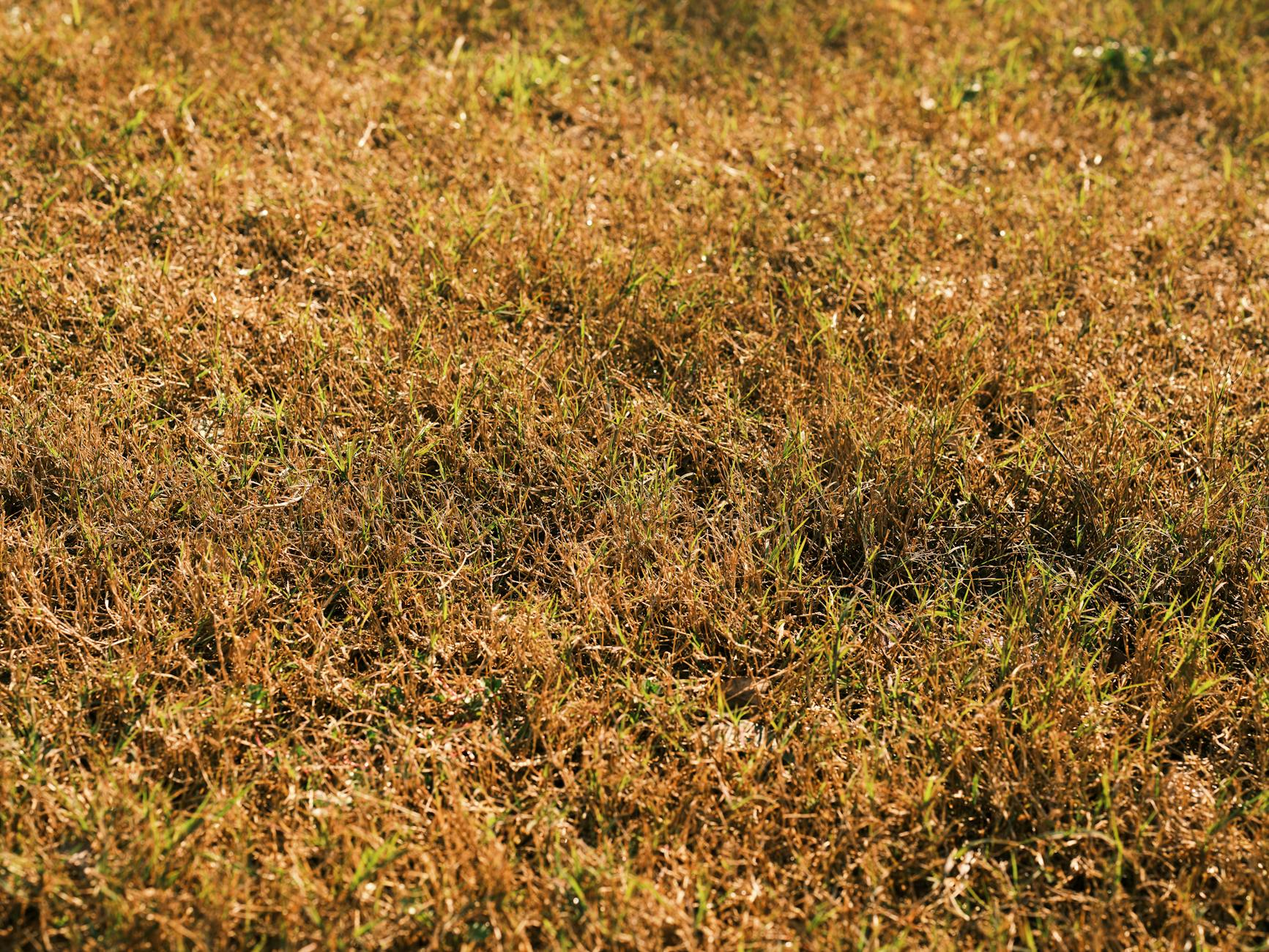
The fungus attacks the base of leaf sheaths, causing leaves to separate from the crown of the plant. What you see above ground are medium to large circular patches with a yellowish border on St. Augustine grass, or a reddish cast on centipede grass. As the disease progresses, the patches thin out, sink slightly, and fill in with weeds.
Large patch thrives on excess nitrogen, poor drainage, and wet turf. The cultural fixes matter more than fungicide here. Apply no more than one pound of nitrogen per 1,000 square feet during active disease periods, irrigate only in the early morning, and raise your mowing height to reduce stress on the plant. When fungicide is needed, active ingredients including azoxystrobin, propiconazole, myclobutanil, and thiophanate-methyl are effective according to LSU AgCenter guidelines.
What Does Gray Leaf Spot Look Like and Which Grasses Does It Affect?
Gray leaf spot is a summer disease that primarily targets St. Augustine grass, though centipede grass and bermudagrass can also be affected. The LSU AgCenter reports it is typically observed from midsummer to early fall in Louisiana, during long stretches of hot, humid weather. Initial symptoms are small, brownish, round spots on leaf blades that expand into larger oval or elongate lesions with dark brown margins and light tan centers.
The disease spreads fast in warm, moist conditions. Shaded or poorly ventilated areas of a lawn tend to show symptoms first. If you see gray, fuzzy growth on the lesions, that is the fungal sporulation, and it means the disease is actively spreading to surrounding grass.
The primary cultural fix is avoiding excess nitrogen, particularly quick-release formulations, during summer months. Water deeply and as infrequently as possible without causing drought stress, always in the early morning. For chemical control, copper-based fungicides or sulfur sprays applied weekly at the first sign of disease can slow the spread. Fungicide applications at 10-day intervals help once the disease is established.
What Is Take-All Root Rot and Why Is It Hard to Treat?
Take-all root rot, caused by the soil-borne fungus Gaeumannomyces graminis var. graminis, is one of the more difficult lawn diseases to manage because it attacks below the soil surface where you cannot see the damage until it is advanced. The LSU AgCenter notes it primarily affects St. Augustine grass and bermudagrass, with symptoms appearing as overall yellowing and thinning that later turns into brown, irregular patches resembling drought stress or large patch disease.
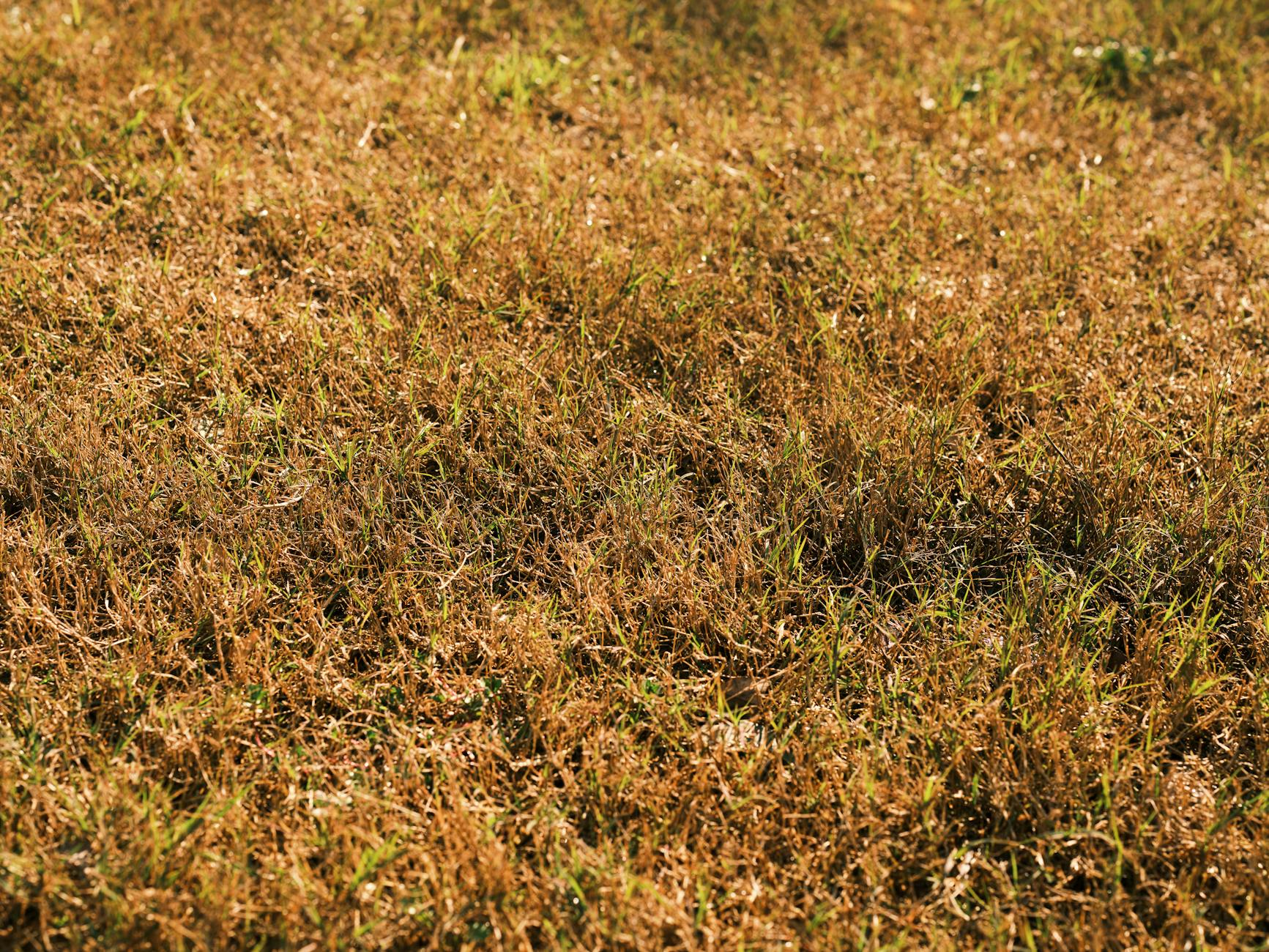
The distinguishing feature is the root system itself. Diseased roots are short, dark, brittle, and significantly fewer in number than healthy roots. When you pull affected stolons from the soil, they detach easily. Under magnification, you may see black strands of fungal mycelium on stolons and leaf sheaths. The disease is stress-driven, meaning it tends to appear after periods of extended rainfall, drought, soil compaction, or poor drainage.
Cultural management is the first line of defense. Maintain soil pH between 5.5 and 6.0, since the fungus develops more readily above pH 6.5. Use slow-release, acidifying nitrogen fertilizers with adequate potassium and magnesium. Aerate regularly to improve drainage. When fungicide is required, azoxystrobin, propiconazole, and thiophanate-methyl are options, though the LSU AgCenter cautions that chemical control alone rarely resolves the underlying stress factors driving the disease.
How Do You Identify Brown Patch in a New Orleans Lawn?
Brown patch is caused by Rhizoctonia solani, the same fungus responsible for large patch, but it appears under different conditions. While large patch is a cool-season disease in Louisiana, brown patch develops during the warmer months when daytime temperatures reach the mid-80s and nighttime temperatures stay above 70 degrees. The LSU AgCenter describes it as one of the most destructive lawn diseases in the state.
The disease starts as small patches roughly a foot in diameter that turn yellow and then reddish-brown or straw-colored as leaves die. Patches expand to several feet across if conditions stay favorable. Brown patch affects bermudagrass, St. Augustine, and centipede grass, but bermudagrass tends to suffer the worst damage.
Nutrient and water management are the two most important controls. Excessive nitrogen during active disease periods makes the problem significantly worse. Use slow-release nitrogen sources when temperatures and humidity create risk conditions, avoid applying fertilizer in late afternoon or evening, and de-thatch if thatch exceeds half an inch, since the fungus survives in the thatch layer between seasons.
What Is Dollar Spot and What Causes It in New Orleans Yards?
Dollar spot appears as small, straw-colored circles roughly the size of a silver dollar, sometimes merging into larger irregular patches when the disease is active across multiple areas. It tends to attack lawns with low nitrogen levels, appearing most often during warm days with cool nights and heavy morning dew, which is a common weather pattern in New Orleans during spring and early fall.
Unlike large patch or gray leaf spot, dollar spot often signals a fertility problem rather than a watering problem. The fix frequently starts with proper nitrogen fertilization on the right schedule. Avoid late afternoon or evening watering, prevent thatch buildup, and keep mowing heights appropriate for the grass type. Copper-based fungicides or Physan 20 can provide chemical control when cultural practices alone are not enough.
How Do You Prevent Lawn Fungus in New Orleans?
Most fungal outbreaks in New Orleans lawns trace back to the same handful of mistakes: watering in the evening, applying too much nitrogen during humid weather, letting thatch build up, and mowing with a dull blade that tears grass instead of cutting it. Fixing these habits prevents the majority of disease problems before they start.
Water in the early morning so grass dries by midday. Keep thatch below half an inch by dethatching annually. Mow at the recommended height for your grass type and keep blades sharp. Test your soil every two to three years to confirm pH and nutrient levels are appropriate. These steps do more to prevent fungal disease than any fungicide treatment applied after the fact.
For lawns with recurring disease problems in the same location year after year, soil drainage is usually the root cause. Poor drainage keeps the root zone saturated, which stresses turf and makes it far more vulnerable to fungal infection. Core aeration, organic matter amendments, and in some cases re-grading address the problem at the source. Big Easy Sod’s lawn care program includes seasonal disease assessments for properties with chronic issues.
Louisiana Lawn Disease Seasonal Reference
| Disease | Peak Season in NOLA | Primary Grasses Affected | Key Trigger |
|---|---|---|---|
| Large Patch | Spring and fall (60-75F nights) | St. Augustine, centipede, zoysia, bermuda | Excess nitrogen, wet turf |
| Gray Leaf Spot | Midsummer to early fall | St. Augustine (primary), centipede | High nitrogen, prolonged humidity |
| Take-All Root Rot | Any season, stress-triggered | St. Augustine, bermuda | Poor drainage, soil pH above 6.5 |
| Brown Patch | Warm months (nights above 70F) | Bermuda, St. Augustine, centipede | Excess nitrogen, thatch |
| Dollar Spot | Spring and early fall | All types, especially bermuda | Low nitrogen, cool nights, heavy dew |
Frequently Asked Questions
How do I know if my lawn has a fungal disease or drought stress?
Drought stress causes uniform browning or blue-gray coloring across the lawn that follows sun exposure patterns. Fungal disease usually appears in circular or irregular patches with distinct borders and may show different colors at the patch edges. If browning appears in circular shapes with yellow borders after humid weather, suspect disease rather than drought.
Should I apply fungicide as a preventive measure in New Orleans?
Preventive fungicide applications are worth considering in early spring and fall if your lawn has had recurring large patch or brown patch problems in previous years. Apply before nighttime temperatures drop into the 60 to 75 degree range for large patch. For most lawns without a disease history, good cultural practices are sufficient.
Can lawn diseases spread from one yard to another?
Yes. Fungal spores travel by wind, rain splash, foot traffic, and mowing equipment. If a neighboring property has an active disease problem, clean your mower blades with a diluted bleach solution between properties and avoid walking from an infected area into healthy turf.
What fungicides work for large patch in Louisiana?
The LSU AgCenter recommends fungicides with active ingredients including azoxystrobin, captan, maneb, mancozeb, myclobutanil, propiconazole, tebiconazole, and thiophanate-methyl for large patch control. Always follow label rates and application intervals. Rotating between active ingredients helps prevent resistance development.
Will my lawn recover from take-all root rot?
Yes, with proper management. Recovery requires correcting the underlying stress conditions, adjusting soil pH, improving drainage, and applying appropriate fertilization. Severely damaged sections may need resodding, particularly if the root system is completely destroyed across a large area. New sod should not be installed until conditions are corrected.
Is St. Augustine grass more prone to disease than other grass types?
St. Augustine is the most popular grass in New Orleans and performs well in the climate, but it is more susceptible to gray leaf spot and large patch than zoysia or bermuda. Centipede grass shares many of the same vulnerabilities. Proper watering timing and nitrogen management reduce disease risk significantly across all grass types.
How do I treat fairy ring in my lawn?
Fairy ring, which appears as circular formations of stunted or dead grass caused by fleshy fungi in organic-matter-rich soil, is one of the hardest diseases to eliminate with chemicals. The most effective treatment is removing an 18-inch depth of soil in the affected area and resodding. Preventing it starts with never burying organic debris like roots or stumps during lawn establishment.
When should I call a professional for lawn disease?
Call a professional when disease patches are expanding despite cultural corrections, when you cannot identify the disease based on symptoms, or when more than 25% of the lawn is affected. Some diseases like take-all root rot require soil testing and targeted intervention that goes beyond what off-the-shelf fungicides can address.
Catching a disease early is always cheaper and faster than treating a lawn that has been suffering for weeks. Pay attention to color changes, unusual patches, or spots where grass stops bouncing back after foot traffic. Those are your early warning signs. For recurring disease problems or lawns that need a full assessment, Big Easy Sod’s maintenance program includes disease diagnosis and treatment planning. Reach us at 504-608-3321 or visit bigeasysod.com to schedule a lawn evaluation.